
SugarCRM Analyst Summit 2022: Bring Out Your Customers!

 The world is getting back to normal, which means two things: Vendors are shifting back to in-the-flesh conferences, and I’m writing again. The convergence of these two facts leads to me cranking out a short blog about SugarCRM’s Analyst Summit, held Nov. 10 in Santa Cruz, CA.


The real highlight of the event for me was speaking to Sugar’s customers, a healthy handful of whom were in attendance. This is a change from my usual experience, where I’m more absorbed in what the host company is doing in terms of strategy and/or product. These customers—I interviewed executives from an air travel contractor, a for-profit shoe charity, and a surgical instrument sterilizer, among others—were the stars of this show. It was a refreshing experience.
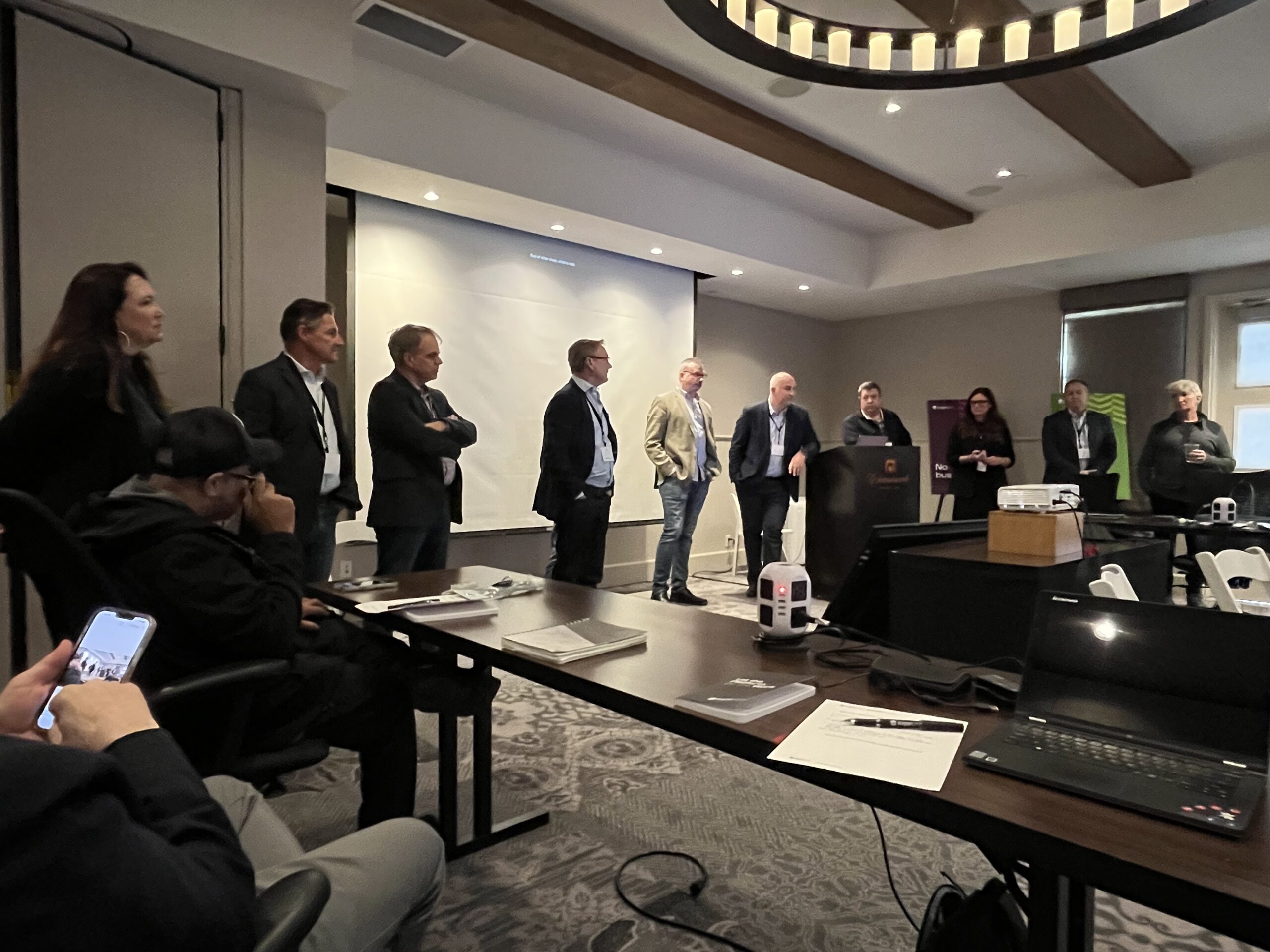
SugarCRM's leadership answering questions at the summit's conclusion

Feel the Message

The expected updates to Sugar’s product road map were there, along with some healthy discussion of messaging. As always, I appreciate Sugar's leadership team and its willingness to listen to feedback on how the company presents itself and adjust accordingly, or at least tell us why they will keep what they have. But the real message for me was those customers and their relationships with Sugar. Most of the time, there’s a certain sameness about the reference customers vendors trot out at events like this; they’re either recognizable brands or have easily explained businesses, they have a typical application and employee environment, and the ROI story is A-B-C. Vendors want you to understand why their customers chose them, and sometimes a challenging story can delay that understanding.

Truthful Tales, Timely Told

SugarCRM’s spotlight customers for this summit brought their passion for their work with them, and their appreciation for Sugar as well. Each one left me feeling that, not only was SugarCRM the right choice for them, but that no other vendor could have satisfied them. If there were parts of the business where they’d never consider switching to Sugar products, they said so clearly and explained why, but we never lost the sense that Sugar was a partner and a permanent addition to their tech environment. Hearing about how easy it was for the fundraising organization to add new fields or modules to the system on the fly, with just a few minutes of downtime to put it in place, told me that Sugar’s core competency—highly adaptible and customizable software—was alive and well. Same for the aviation services company and its ability to identify new opportunities in a very low-volume business, or the surgical equipment sterilizer’s balance of field service and freight-shipped repair jobs, despite Sugar not being especially well-known for field service. (Not to say Sugar lacks it, they’re just not the obvious standout.)

New technology, and new ways of presenting and using it, will always be important in enterprise software. Analysts are not going to get tired of hearing about it. But it’s the stories behind the tech that sell it, and that sell us on why one vendor’s got momentum where a similar one doesn’t. While I don't completely agree with Sugar CPO Zac Sprackett that CRM is "storytelling at scale," he's definitely onto something. Bring the best stories, the customers that we couldn’t imagine using somebody else’s product, and let them tell us why.


Comments

Last Year's Top 5 Popular Posts

You are only as good as your customer remembers

As you know, I am very interested in how organizations are using business applications, which problems they do address, and how they review their success. In a next instance of these customer interviews, I had the opportunity to talk with Melissa Gordon , Executive Vice President, Enterprise Solutions at Tidal Basin about their journey with Zoho. You can watch the full interview on YouTube. Tidal Basin is a government contractor that provides various services throughout the government space, including disaster response, technology and financial services, and contact centers. Tidal Basin started with Zoho CRM and was searching for a project management tool in 2019. This was prompted by mainly two drivers. First, employees were asking for tools to help them running their projects. Second, with a focus on organizational growth and bigger projects that involved more people, Tidal Basin wanted to reduce its risk exposure and increase the efficiency of project delivery. This way, the compa...

Sweet Transformation: Inside SugarCRM’s New Direction

Fresh from the 2025 SugarCRM Analyst Summit, waiting for my plane home, it is time to sort my thoughts. From Monday, 1/27 evening to Wednesday 1/29 in the morning we had some time jam packed with information and good conversations with SugarCRM execs, customers, and in between analysts. The main summit started with a bang, namely the announcement that industry icon Bob Stutz joins the SugarCRM board of directors , which is something that few of us, if any, had foreseen. This is exciting news.  With David Roberts , who succeeded Craig Charlton in September 2024, SugarCRM itself has a new CEO with a long time CRM pedigree.  As with every leadership change, this promises some change. Every new CEO evaluates what they see vs. where they want their company to go and then, together with the team, establishes and executes a plan to get there. Usually, this involves some change in the structure of the executive leadership team, too.  This is what happened and happens with SugarCR...

Data Wars: SAP Vs. Salesforce In The AI-Driven Enterprise Future

The past weeks certainly brought a lot of news, with SAP Sapphire and Salesforce's surely strategically timed announcement of acquiring Informatica , ranging at the top. I have covered both in recent articles. The enterprise software landscape is crackling with energy, and Artificial Intelligence (AI) is certainly the star of the show. It isn't anymore about AI as a mere feature; it's about AI as the strategic core of enterprise software. Two recent announcements underscored this shift: SAP's ambitious AI-centric vision that was unveiled at its Sapphire 2025 conference, and, arriving hot on its heels, Salesforce's agreement to acquire data management titan Informatica for $8 billion. Both signal an intensified battle for AI supremacy, where trusted, enterprise-wide data is the undisputed new monarch. Of course, SAP and Salesforce are not the only ones duking this one out. SAP's Sapphire Vision: An AI-Powered, Integrated Enterprise At its Sapphire 2025 event in ...

The CDP is dead – long live the CDP!

In the past few years, I have written about CDPs, what they are and what their value is – or rather can be. My definition of a CDP that I laid out in one of my column articles on CustomerThink is:  A Customer Data Platform is a software that creates persistent, unified customer records that enable business processes that have the customers’ interests and objectives in mind. It is a good thing that CDPs evolved from its origins of being a packaged software owned by marketers, serving marketers. Having looked at CDP’s as a band aid that fixes the proliferation of data silos that emerged for a number of reasons, I have ultimately come to the conclusion and am here to say that the customer data platform as an entity is increasingly becoming irrelevant – or in the typical marketing hyperbole – dead.  Why is that? There are mainly four reasons for it.  For one, many an application has its own CDP variant already embedded as part of enabling its core functionality. Any engageme...

CPQ, Meet Price Optimization: Your Revenue Lifecycle Just Got Serious

The news On October 1, 2025, Conga announced its intent to acquire the B2B business of PROS , following PRO’s acquisition by Thomas Bravo . At the same time, ThomaBravo and PROS announced that PRO’s travel business segment will be run as a standalone business . The bigger picture Revenue operations, revenue management and revenue lifecycle management have become a thing in the past years, as evidenced by the number of specialized companies that solve parts of the overall problem of optimizing revenue. It also got abused to some extent (e.g., surge pricing models) when the users of the corresponding capabilities consider optimizing being the same as maximizing. Reality check: It is not. While optimizing involves a bit of identifying how much a customer is willing to pay, it also involves the thought of repeat business, or in other words customer loyalty, even without a formal loyalty program. And that involves the customer experience, part of which the speed of creating a quote with mat...